It's Friday. Love and peace especially the Ashpital family who need it more than ever.
Yesterday I talked about that wonderful speaker Chris Lubbe who had survived torture, repeated imprisonment and witnessing the murder of a man he was trying to help, rising above retaliation with the help of the Truth and Reconciliation Commission, choosing a non-violent path. His generosity of spirit and his words are still going through my head. He said things like "some of you are suffering pain and ill health, but you will get through it." and "if I got through torture, you will get through this" "We do not have to accept the world as it is." "We need to do our part to bring about change". "Don't look back on bad things that have happened." "Find a way to make the world a better place".
And that has given me and I think hundreds of others lucky enough to have been on this cruise so much hope.
Since writing yesterday we have covered another 450 nautical miles, crossed the Equator and are heading North West, from the live info on screen it looks as though we are just south west of Liberia, (Hello Adrienne and Winston, thinking about inspiring people!). Our coordinates are 2 degrees north and 10 degrees west, so as predicted back in the Northern Hemisphere. It's 31C today, and cloud cover is classed as 5/8. The heat has advised us indoors again, firstly to paint a humming bird with a background produced by putting a wet on wet wash under a sheet of Clingfilm. I love the effect the wrinkles make. I went to two art classes actually.
Then we lunched, heartily again, listened to a Historical Murder Presentation, one of a series presented by an ex- policeman who has researched them, and now tells the stories, presents the evidence before the audience becomes the jury and then hears the outcome.
Today at lunch we were accompanied by a pod of dolphins for several minutes. Beautiful shiny dolphins jumping, playing, friends. It was so lovely to see them. I am amazed that considering where we are we hardly see any sea life, so its a real delight when it happens. The flying fish have come back again too, so we watch them from the balcony too, and enjoy beautiful sunrises, changing seas and skies.
Over the course of a lovely dinner we talked to the couple from Scotland we dined with two nights ago, Margaret and Alan. We covered some ground! Family, teaching, South African politics, hip replacements, world travel, this cruise. They were lovely and so easy to talk to. We discovered that Jimmy James hadn't been allowed to disembark in Cape Town to travel on to his next cruise ship gig. He apparently didn't have enough blank pages in his passport.
For a few days we have been back on UK time, but tonight we will put the clocks back an hour, and possibly one more time before we turn right after Cape Verde and head north eastwards towards the Canaries and Madeira. Two more sea days yo land...
Early night for us - all this on board activity and inspiration can be tiring. Bye for now x
Still thinking all the time about Grandad Roy. Love to all the Ashpitals xxxx
My oh my, we can feel certainly the equatorial heat today. Definitely in excess of 30C. An indoors day was needed today, even breakfast on the deck in the shade at 9 this morning was a bit too hot for us Brits (not all I have to say, some are still getting roasted and turned out on their sunbeds. There was at least one casualty of the heat today, as one man collapsed on deck 13. He was stretchered away.)
So we have entertained ourselves indoors, more art, drawing and painting a monk seal. Pam Carter is the name of the art teacher, quite eccentric at the same time as being an inspirational woman and artist, and as if that wasn't enough, cancer and stroke survivor. She is accompanied by her husband, a former rugby player now confined to a wheelchair as a result of his career, for whom she is also a carer. Maximum respect to them both.
On the subject of inspirational we then went to Chris Lubbe's third and final talk, this one was about the work of the Truth and Reconciliation Commission ( links to a BBC feature narrated by Fern Britton) after apartheid, and the appointment of Desmond Tutu to chair the commission using a restorative justice and amnesty approach. The Commission had three functions: human rights, amnesty and reparation. Hearings took place between 1996-1998, starting in the Western Cape.
How to forgive was at the heart of the work of the commission, but in needed full disclosure and engagement of the perpetrators. How to be listened to as part of catharsis for the victims and their families. There is a SA government TRC site for background and ethos. On You tube there are full hour long broadcasts of the interviews by the TRC (warning of horrific details) for example https://www.youtube.com/watch?v=WRE_eM_LtR4
Today's talk was really visual - clips of state sanctioned violence, in particular an event referred to as the Trojan Horse Massacre, where police hid in a container and then just burst out opening fire on everyone peacefully demonstrating - I have now linked to You Tube. He showed us photos from the commission, and added profoundly moving narrative. There are still so many things I would like to know, but it will have to wait until I am at home, with access to libraries and internet for research. I have found another documentary which gives a more information (if you watch please be prepared for the reality), and I have also found the following 21 minutes of summary really helpful.
There was time for a few questions and answers today too. One was to ask about the presence of segregation before apartheid was enshrined in law - eliciting an uncomfortable response about the regime imposed by British and Dutch colonialists. One was to ask why there's so much inequality even now 20 years on. The answer was respectfully that 300 years of inequality cannot disappear in one generation, I have learned so much from these three sessions and feel absolutely privileged to have been here at this time. Two of these 3 sessions are on a loop on channel 2 in our cabins now too, so I will be able to review the details I may have forgotten.
Tonight after dinner we decided to go to the Curzon theatre to watch the Headliners Theatre Company perform "Blame it on the Boogie", but unfortunately there were some technical difficulties and the show was cancelled just after it started. The "pit lifts" went down below stage level, and as it was a dance performance it was too dangerous to carry on.
We are now back in the cabin watching parts of Tinker Taylor Soldier Spy interspersed with Liverpool v. Borusia Dortmund. It's a great thing to be able to study the map of Africa in our cabin and to learn where we are in relation to Gabon, Cameroon and Nigeria, and how we will be sailing towards Cape Verde to the west of Ghana, the Ivory Coast, Liberia and Senegal. They were just place names, and I never really placed them on a map before. I hope I remember all this. A few years ago I learned all the locations of all of the USA, I think I'd be hard pushed to remember even 10 accurately nowadays. Losing what I don't use unfortunately.
Our current location after another 440 nautical miles towards Cape Verde is 1 degree south of the equator and 6 degrees west, so we didn't cross the equator overnight as I had expected. Instead we have been told it will be overnight tonight, and then we are back in the Northern Hemisphere for the final stretch, visiting the Islands - Cape Verde, Canaries (Tenerife and Gran Canaria) and Madeira before returning to Southampton.
We are both feeling really sad for our dear son-in-law Rob, and for Sara, Izzy and Leon as they are forced to come to terms with their awful sudden loss of Grandad Roy, and their unbearable grief. Love and peace, my dears xx
As we travel northwards up the South Atlantic we can feel the move into the tropics again. I am sitting on the balcony feeling the intense heat and humidity again. Not feeling very much like talking today. The sea is calm and there's minimal swell so nausea is a distant memory from the Indian Ocean, and long may it stay that way. We have another 2000 nautical miles to travel before our next stop in Cape Verde. We are currently at 6 degrees south of the equator and 12 degrees west, that puts us in the part of the Atlantic to the west of Angola. I am guessing that means there'll be an uneventful an equator crossing while we sleep in our air conditioned cabin. We are continuing with our art classes - Namibian sand dune landscape yesterday, and Namibian Gecko today. All good.
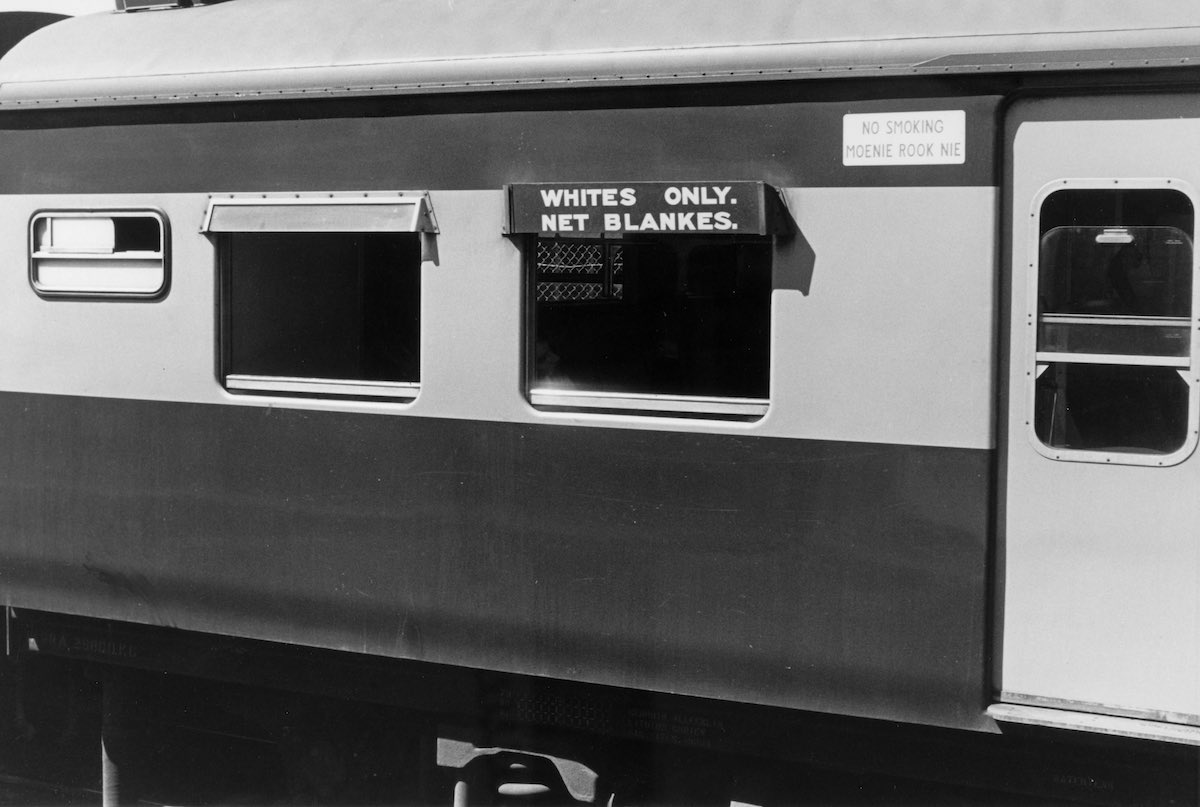
Once again we have been to hear an inspirational talk by Chris Lubbe, the second of three. Apologies if the following summary seems a bit disjointed. I didn't write anything down at the time and there's so much to remember. I only hope I do Mr Lubbe justice. Today he spoke a little more about his own life. He had left us on a cliff-hanger on 11th as he described having to witness the black man he was trying to help from missing his train being pushed out of the moving train by two white South African police. He reminded us of witnessing his own mother being thrown to the floor for sitting on a whites only bench whilst waiting for emergency medical aid as she slipped into a diabetic coma. These two events are what led him further into political activism, further imprisonment and the most vile of all torture.
He also spoke to us of how the late Steve Biko had visited and supported the squatter camp to which his family had been exiled in Durban, and taught Chris and his peers to write letters to world leaders, and of his own letter which he wrote to the Queen, but never received a reply.(see later). You might remember Steve Biko and Donald Wood in the film Cry Freedom starring Denzel Washington as Steve Biko. (Trailer)
In answer to a question one of the cruisers asked him - where and how did Apartheid begin? He showed a photograph of the architect of apartheid in South Africa, Hendrik Verwoerd (sp?) He is said to have learned about it from the British Colonialists and the Bible. It started in 1948. Thereafter successive governments up to P.W Boethe got away with imposing white supremacy and sanctioning the use of violence and all kinds of cruelty to control the black majority. This was very strangely after the Holocaust and the defeat of Hitler, and contemporary with segregation by colour in the southern states of the USA. A World War against, amongst other things, Arian supremacy had just been fought and won. How did Apartheid slip through without similar worldwide intervention? What made this situation any less worthy of the interventions of the 70's and 80's 40 years sooner? It's so obviously evil. What makes humans do something so wrong for so long?
He also illustrated how political will outside of South Africa was changing. Trevor Huddleston was working in SA and became vocal about human rights. He was banned from SA and on return to the UK turned to the Anti-Apartheid movement. This gained momentum and slogans began to appear in high profile places. Bands and musicians began to put on their albums "we do not support Apartheid", and slowly governments were influenced to withdraw trade and force the SA economy into jeopardy. We were also played the anthem "Free Nelson Mandela" to remind us of the times when a person buying a Free Nelson Mandela mug in the UK and taking it back to SA was sent to death row for bringing in "subversive material". He told us how vhs tapes of the Free Nelson Mandela music concert were banned and had to be smuggled into South Africa - again this was deemed to be "Subversive material". He recollected how just as the film was about to be shown, the venue was raided, he got caught and imprisoned. He described imprisonment and the inevitable torture of black political prisoners to make them talk, like being handcuffed and having his feet bound, and then being stood under a cold shower for a week, surviving only from the water from the shower, and becoming emaciated. Several times he thought he knew he was going to die. The guards would get bored and play Russian Roulette with him. One night after being forced to hold a gun to his own head, firing several blanks, knowing his chances were 0, the live bullet got jammed, and even though he had already suffered, he began to think his father's prayers for his safety were being answered, because he had survived. He recalls how he resolved not to become violent in his struggle, instead to take a peaceful approach.
I hadn't realised that Elton John and Queen had played in Sun City when people like Peter Gabriel and Bob Geldoff were boycotting apartheid and being very vocal about the injustices. I wonder why they did this? I wonder how they feel about it now?
Apartheid had many extreme and violent supporters in high positions - Chris mentioned Eugene de Kock aka"Prime Evil", imprisoned for 20 years for his role in murders. I have, since this talk, been looking on the net for history of Apartheid and discovered the most extreme end is still in existence. It makes me feel very uncomfortable but in the interest of balance it is right to include the flip side of the Rainbow Nation, without wanting to give it much space. Footage and articles about Eugene TerreBlanche give this side of the story. One of the most disturbing clips of Terreblanche I watched was an old Louis Theroux programme which looks as though it may have been aborted after a few minutes
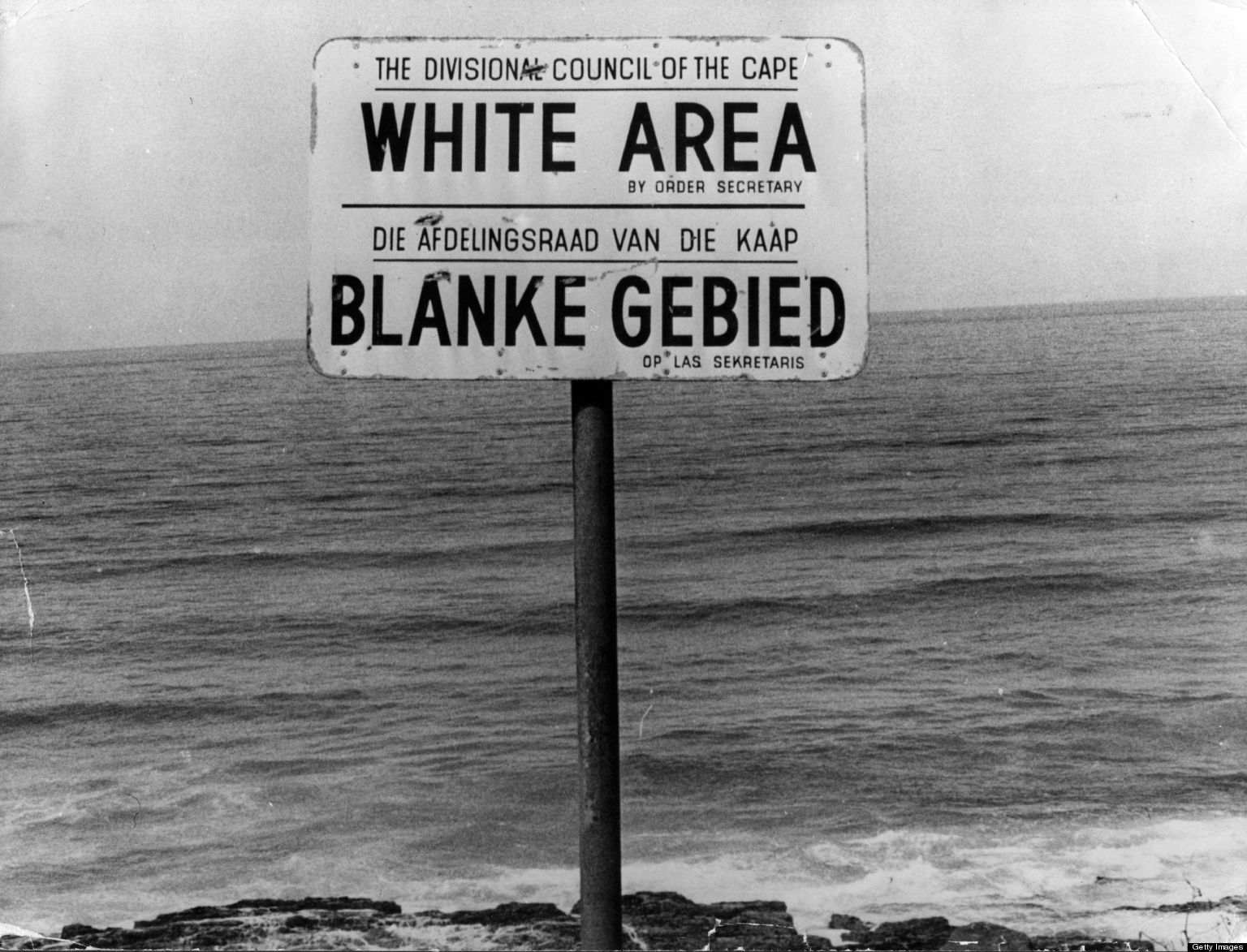
Apartheid covered many public places - beaches, benches, toilets, buses, hospitals, schools, colleges,workplaces.
Black people sitting down on whites-only beaches was illegal. Peaceful seated protests were often brought to an end by police helicopters landing near a sit in, and invariably violence. However, black people jogging on the beach wasn't illegal until the 1980's, a loophole which Chris showed was exploited as far as it could be, by daily jogs. Chris has a photo of Arhbishop Desmond Tutu jogging on the beach laughing and wearing a T-shirt with "Just Call me Arch" printed on the front. He referred to Arch as a mischief maker, something I have now heard several times.
At around the time when many white South Afrians were beginning to express anti-Apartheid sentiments, a group of White women in South Africa formed a Black Sash organisation and silently and non-violently protested against Apartheid, without arrests because they were white, in large numbers. We never heard about this. During Apartheid the newspapers were always censored, and access to outside or "dissident" news was blocked. Often whole articles or pages were blacked out.
During this time the ruling party had selected a new leader. Chris quite emphatically described how F W De Klerk was largely unrecognised as a strategist or for his contribution to the changes in South African government, although the Nobel Peace prize was awarded to both Mr Mandela and Mr De Klerk. De Klerk had apparently feigned right-wing-ness to become selected as the new party leader, yet once elected his true views became instantly known. Without hesitation he released Nelson Mandela in 1991 and unbanned the ANC.
Nelson Mandela tracked Chris down at some point after his release, phoned him and invited him to meet with him. Chris thought it was a hoax, and hung up on him! It was real, he called back and Mandela offered him employment as a body guard, even though Chris confessed to not being able to use a gun. Mandela sent him to be trained with the SAS. By getting into contact with Nelson Mandela, Chris discovered his father had actually also been an activist whilst he (Chris) had been growing up. Chris's father had hidden Nelson Mandela from the police when he was on the run. Chris recollects how twitchy his father was after 9 at night when anyone came to the door, but had no idea what the reason was. His father told him that he didn't tell Chris he was hiding Mandela because he would have "blabbed" and got everyone sent to prison.
Three years later the country had its first democratic election and the ANC won with a landslide, some new voters queued for 3 days to cast their vote. Nelson Mandela became President on 10th May 1994.
One day early on in his government, Mandela gathered his team together and said he wanted to make FW de Klerk his deputy. This is the point where soul searching about the true meaning of reconciliation began. Chris then showed us a short extract of the film Invictus, and pointed out the character who was playing him, and how the film differed from reality. The scene in the film represented the moment in Chris's real life of a massive shift of attitude, the moment when the former white special branch who had inflicted torture, became the body guards of Nelson Mandela's team. It wasn't easy, but it happened. One of these men had actually tortured Chris, and he told us how he is now his friend, really genuinely his friend.
So in this part of his story Chris remembers the boy from the shack in Durban with no electricity or water now travelling the world with hero Nelson Mandela, advising him sometimes, meeting world leaders, including the Queen and the president of the USA. He related a very touching story of how the Queen brought the letter to him he had sent from South Africa under Biko's tutelage. It seems the Queen did reply but censorship of the mail in SA meant he never received her reply. The closing part of the talk showed famous quotes from Desmond Tutu about forgiveness leading to freedom, Truth and Reconciliation, the movement forward, Nelson Mandela's vision for a Rainbow Nation and the way he changed the association of the Springbok with white south Africa into a powerful message of reconciliation.
There is one more session about Truth and Reconciliation to come tomorrow.
This is the longest stretch we have ever been at sea without port stops, so we'll make sure we keep busy and plan our leisure activities and our education. There are two art classes a day, two craft classes, two visiting speakers, several health and beauty presentations and four different types of light entertainment. And while Khachik is still going into the gym every day, I do like a bit of telly too
This afternoon there was also a most distressing, totally necessary, illuminating talk by Chris Lubbe, former body guard of Nelson Mandela. He lived through apartheid and in today's talk he reflected on his childhood and the realisation of what apartheid meant through the things he saw around him in his own life. He gave a bit of background to his own heritage, and how he came to be legally (in apartheid) classified as coloured. His grandmother was a maid who was raped by her white employer. When he was born he had a lighter brown skin colour than "black" classification allowed, and blond curly hair. As an infant he went through various bizarre racist tests like measurement of the breadth of his nose, thickness of his lips using a ruler, and famously the "pencil test" where a pencil was put through his hair. The determining factor was if it the pencil sticks in the person's curls, the person is classified as "coloured", if it drops straight through to the floor the classification is "white". Apparently white children in black families just weren't allowed, so if a child was classified as white they were either placed for adoption or sent to an orphanage. Chris's father said "luckily the pencil got stuck", but for Chris it meant he was not classified as black like his dad and as a result experienced many different kinds of discrimination and feelings of not belonging anywhere.
Chris then spoke about his recent work for Nelson Mandela and Desmond Tutu. He has several anecdotes of the fun had by Nelson Mandela denying celebrity, and imploring him to do the same. He also told us of his responsibility to tell things they way they were. He even has a piece of limestone from Robben Island, given to him by Nelson Mandela for him to use as a visual aid, so that future generations would know what their forefathers went through. He then went on to tell several very powerful stories. I am going to try to remember some of them.
First when he was six his family was living in port St John which I think is in the Eastern Cape on their own inherited land, farming animals. One day two white government officials appeared on their land to give them 7 days notice to pack and leave for Durban, as the land they owned had been reclaimed as "whites only" land. They moved without possessions to a squatter camp, and became homeless and destitute, with no system of justice to protect them. Their former land became a whites-only holiday resort.
Next at the age of 8, on his 8th birthday in fact, his mother took him on a bus ride by way of celebration. He became aware of "non-white" buses, benches, toilets, hospital, areas in towns. During the bus ride his diabetic mother became ill. The driver was unable to stop the bus to let them off. When they were let off the bus the only seat available was white only. She sat there waiting for emergency aid. A white woman agreed to make a phone call in a white only phone kiosk to avoid a black passer by being arrested. Chris described how two policemen came and physically threw his mother from the bench to the floor, where she hit her head on the ground and was knocked unconscious. The two policemen just walked away, leaving Chris screaming for help. Luckily it came. Some women came, reassured Chris and helped until the ambulance arrived. This began a 3 month hospital stay, where she slowly recovered and returned home.
The final and for me most painful of all stories he explained that he had largely educated himself. Schools were very poor. Possibly 60 to a class, explaining he thinks the current high levels of illiteracy. He said there were volunteers who came in to the squatter camps with feeding programmes and extra lessons. He said one of those was a student, named Steve Biko.
Of course with the help of Peter Gabriel's haunting song Biko, his tragic story is now famous, but in the earlier days before his incarceration and untimely death in custody in 1977, he taught Chris. Chris described searching dumps for disposed books, reading under the bedclothes with the one family torch, and always running down the batteries.
These were clear moments which inspired Chris to become an equal rights activist, and along with that came his own inevitable imprisonment for 4 months with hardened criminals. His crime was leading a demonstration.
Following his imprisonment he decided to reply to an advertisement for trainee aeroplane pilots, only to be rejected because he wasn't white. He was bitterly disappointed and with the help of his uncle took a job on the railways. During this time he helped a black man not miss his train by allowing him onto a white-only carriage, and then walking with him through white-only carriages to reach the black-only 3rd class carriages. Here they were both beaten up by two white police officers. Chris was thrown to floor and sustained a severe beating and a broken arm. As the other white passengers looked on, the man he was helping was then thrown out of a moving carriage to his death.
This was the end of his talk, a cliff-hanger. Chris vividly gave an account of his devastation, how he was left to cope with this without counselling...... to be continued on 13th. Oh my word. He is still here, having gone on to be Nelson Mandela's body guard, and has so much more to tell us about Truth and Reconciliation. This is a miracle in itself and we feel really privileged to be here with him.
I am not going to be able to write about anything else today.
xx
Since coming home I have been listening and watching many documentaries like this on you tube if you would like to get a bit more background to Apartheid and Nelson Mandela's family today, and a somewhat negative flip side of the Truth and Reconciliation process.
We arrived here in Namibia very early this morning, it was foggy AND we couldn't really see anything except what was immediately on the port side. This is said to be normal winter weather - it was explained as being caused by the warm air from Africa and cold Atlantic ocean. We had a lovely breakfast, got through immigration really quickly and easily before 10 a.m., by this time the mist had completely cleared and once again we had sunny clear blue skies, and a lovely agreeable warmth. Before our afternoon excursion we had time for an independent morning outing via shuttle bus to the Walvis Bay Waterfront - a tiny place with a bar or two, a restaurant and one souvenir shop, so very very different from South Africa, and not really ready for cruise ship tourists I guess. It was lovely there anyway, on wooden decking above the sea, drinking strong coffee and catching up with wi-fi, meeting more passengers.
By 12 we were back on the ship, getting a quick snack, before going out again at 12:45 for the Main Event!
For our afternoon excursion we were in a 4X4 with four other people and the most knowledgeable, confident and kind driver, Peter for the time of our lives. First he introduced himself and told us a little bit about his background - born in South Africa, Scottish ancestors, English and Afrikaans speaking, moved to Namibia 20 years ago, learned some German, took up driving for this tour company and here he is, working only when he wants. We piled in, belted up and were off We made our first stop to pick up food, wine, beer, fruit juices - for a picnic later, not expected, but very welcome. Then we moved along, six vehicles all together in convoy. First we drove along the coast road (a dirt track really) stopping to look at the famous greater and lesser flamingos. We had a lesson about their behaviours and differences, it was fascinating. Then we drove past the salt production, reeds, scrub land, sand with tracks identified as dung beetle and springbok. The next stop was a rendezvous for all the vehicles and an introduction to a very cute white and orange gecko before the greatest sand dune adventure ever. Some of the sand was almost white, some was red, but most was sandy as we know it. Slowly, like driving on ice, going up, having to reverse several times to regain momentum, then up and over the tops and down at unbelievably sharp angles, we were told 33 degree angles, but they felt much much sharper than that, giving us rollercoaster-like sensations, lots of screams and moans, holding on to the bars on the inside of the 4X4s to stop us becoming too familiar with our fellow passengers. Sometimes we were driven straight down, and sometimes zig zagging up and down. It was hugely exciting. Then there was the light hearted competition between the drivers, and also a strong bond and cameraderie.
After about an hour of this we stopped for our picnic, again a delight. Samosas, meatballs, various cold meats and salads. Coconut, chocolates and drinks. So civilised, like a dinner party in the sand. Table, table cloth, proper glasses :) Only the toilets were missing, but most people were happy to relieve themselves in the dunes! There was even time for a botany lesson and the opportunity to taste something that sounded like "narra" seeds and the highly nutritious food made from the pulp of the boiled seeds of the spiky green shrub surrounding us. This is where we saw mice nibbling away at the shrub and dung beetles massive things, making their escape into the sand. After this came the 40 kilometre return journey back to the ship, again up and over the dunes with just as much excitement. We got close up to families of springboks and a hopeful looking jackal, close enough for some excellent photos. Funny how we didn't fall asleep in transit today!!!
Anyway, back to earth from the lunar views, back to the ship, Namibian departure/immigration no problem, again a lovely dinner sitting with two Swedish women, laundry and now back in the cabin watching Skyfall. I can hardly believe we did that! I think we will sleep well tonight. We have 7 sea days ahead before Cape Verde. So I will say bye now.
Today has been sunny and calm on the Atlantic west coast of southern Africa. No swell, just soft ripples and reflections, and the most beautiful colours in both sea and sky.
The final sector of this cruise, Cape town to Southampton, has now begun. This means we are over the halfway mark of our cruise. Our next port is Walvis Bay, Namibia. We arrive early tomorrow morning. We have booked an excursion called Sandwich Harbour by 4X4 tomorrow afternoon. We are really looking forward to the wild life. It's been a beautiful 20-25C today, and will start to get hot again from now as we go through the tropics again and cross the Equator within the next week.
With the new cruise sector has come a new art teacher, a very enthusiastic woman from the Lakes called Pam. She has a very interesting story of being a physio, retiring, having a stroke and then taking up art on a cruise ship. She isn't a "professional" artist, nevertheless I really like her style and bubbly personality. She spent the morning's session revisiting various techniques, using bits of sponge, sticks, cotton buds, cotton cloth, alcohol gel, cling film and salt. I am very happy to say that art has suddenly become very playful. I enjoyed this morning's class so much, I went back this afternoon and painted a springbok while Khachik was in the gym. I am happy with my springbok too. What a delightful way to while away a few hours.
We dined with a new couple tonight. They were called Maggie and Alan, from Aberdeen. Lovely people, retired academics who have done lots of cruises over the last 20 years. They were able to advise us a lot about future cruises. (Alaska, Eastern Europe and South America to name a few!) After dinner we went to the Curzon Theatre for a Four Seasons tribute act called "Walk like a Man" - Loved the two decades worth of memories stirred up by the music again. Even got all emotional, although i don't like to broadcast it, so please don't tell anyone. The theatre was chock full, and I also hesitate to admit that there was lots of singing along and almost, but not quite dancing in the aisles - by that I mean one or two people got up and moved in that direction, but then changed their minds.
We have another immigration process for a new country in the morning. After South Africa the mood around immigration procedures is in general a bit "low"! Khachik and I weren't badly affected because we weren't in a hurry, but some poor folk were left queueing in the heat for hours, 5 hours. So, our plan will be to take it easy again. Our face to face inspection will luckily be after breakfast because our excursion is not until early afternoon. (Smug smile)
We are back in the cabin now ready to sleep, just going to watch a bit of telly, thought about Luther but then it got a bit scary, so I'm now flipping between Live at the Apollo and a travel programme about Namibia.
Today we went on an absolutely brilliant excursion to the top of Table Mountain by coach and cable car, with a fantastic, funny, caring and professional tour guide. We had a third clear sunny day with hardly any breeze, 30+C so we have been really really lucky today. This was made even sweeter because the tour guide saw that I was walking with a walking stick today and filtered me off into a group allowed to jump the one hour queue, go up in the lift to join the cable car with all the "gogos". Khachik was allowed to come with me. Khachik did a phone video both up and down in the cable car, which incidentally rotates to give everyone a chance to see everything. There are about 60 people in each car, and 2 cars in operation. The organisation of the cars is fabulous and on the top of the mountain there are all sorts of facilities including internet cafes, bars and shops. So much to see up there - truly stunning and breathtaking views, very different terrain, three different types of stone I hear, unique wildlife (notably lots of little lizards, some pure black, some with turquoise heads), and the most beautiful birds I have never even seen pictures of. Research required!
We stopped up there for about an hour for short walk, a coffee and a snack, and Khachik found internet to make contact home. While we were doing that a couple who had already left the ship at Cape Town joined us. They said they were from Cheltenham, Warden Hill to be exact. I told them about my 11 years in Cheltenham, and mentioned Pate's Grammar School, of course they knew it. They asked where we were from. When we said Glossop, they said they knew another couple on the same ship called Brian and Maria from Hadfield. They have now also left the ship, without us getting to know them, which is a shame. Who knows we might meet up with them some time in the future. However we might meet another of their contacts Tom Williams, apparently from our neck of the woods. Hope we recognise him from their description.
At departure time, the SA immigration team again found it necessary to take their time doing the face to face passport checks and stamping, which has resulted in almost 3 hours delay leaving Cape Town. The queues were bad, it was hot, bottles of water had to be given out in the queues to prevent dehydration. I think the best thing is to expect delays, and not rush out of the cabins to queue, but arrive at the tail end and pass through quickly.
Never mind, we've eaten now, met a lovely couple from New Zealand and are back in the cabin ready for a good night's rest. Sea day tomorrow. New art teacher! New sector. Excited about Namibia on 10th April Bye for now. xx